Citrus is a genus of flowering trees and shrubs in the rue family, Rutaceae. Plants in the genus produce citrus fruits, including important crops such as oranges, lemons, grapefruits, pomelos, and limes.
The genus Citrus is native to South Asia, East Asia, Southeast Asia, Melanesia, and Australia. Various citrus species have been used and domesticated by indigenous cultures in these areas since ancient times. From there its cultivation spread into Micronesia and Polynesia by the Austronesian expansion (c. 3000–1500 BCE); and to the Middle East and the Mediterranean (c. 1200 BCE) via the incense trade route, and onwards to Europe.
![citrus: The Complete Series [Blu-ray]](https://www.virginiabonsai.org/wp-content/plugins/aawp/public/assets/img/thumb-spacer.png)
Contents
- 1 Description
- 2 Cultivation
- 3 Uses
- 4 Taxonomy
- 5 Products
- 5.1 Bonide Captain Jack's Copper Fungicide, 32 oz Ready-to-Use Spray for Organic Gardening, Controls Common Diseases
- 5.2 GooingTop Grow Light LED Gooseneck Lamp,6500K 50W Full Spectrum 72 LED Plant Lamp Clip-on Desk for Indoor Plants Growing,Lighting Brightness Changeable,Timer 4 8 12 18Hrs
- 5.3 Knente Grow Lights for Indoor Plants, DICCEAO 150W LEDs Grow Light for Seed Starting with Full Spectrum, 3/9/12H Timer, 10 Dimmable Levels, 3 Switch Modes
- 5.4 Bonide Insecticidal Soap, 32 oz Ready-to-Use Spray Multi-Purpose Insect Control for Organic Gardening Indoor and Outdoor
- 5.5 REALPETALED Bonsai Starter Kit – Japanese Bonsai Tree Kit with Bonsai Tools, 7 Bonsai Tree Seeds, Pots – Complete Grow Your Own Bonsai Tree Live Kit – Plant Lover Gifts Home Gifts for Men and Women
- 5.6 HARRIS Neem Oil Spray for Indoor and Outdoor Plants, Cold Pressed Ready to Use, 20oz
- 5.7 Harris Premium Succulent and Cactus Potting Soil Mix, Fast Draining with Added Nutrients, 4 Quarts
- 5.8 Melon Fruit Seeds For Planting Home Garden 5 Variety Packs - Hales Best Cantaloupe, Crimson Sweet Watermelon, Yellow Canary Melon, Green Flesh Honeydew Melon, Sugar Baby Watermelon by Gardeners Basics
- 5.9 GHodec Grow Light for Indoor Plants,6000K 126LED Clip Plant Lights with Flexible Gooseneck & Timer Setting 4/8/12H,5 Dimmable Levels
- 5.10 Bonsai Soil by The Bonsai Supply – 2qts. Professional Bonsai Soil Mix | Ready to use| Great for All Bonsai Tree Varieties.
Description
Tree
These plants are large shrubs or small to moderate-sized trees, reaching 5-15 m (16-49 ft) tall, with spiny shoots and alternately arranged evergreen leaves with an entire margin. The flowers are solitary or in small corymbs, each flower 2-4 cm (0.79-1.57 in) diameter, with five (rarely four) white petals and numerous stamens; they are often very strongly scented, due to the presence of essential oil glands.
Fruit
The fruit is a hesperidium, a specialised berry, globose to elongated, 4-30 cm (1.6-11.8 in) long and 4-20 cm (1.6-7.9 in) diameter, with a leathery rind or “peel” called a pericarp. The flavedo, also known as the zest, is the outermost layer of pericarp. The middle layer of the pericarp is the mesocarp, which in citrus fruits consists of the white, spongy “albedo”, or “pith”. The innermost layer of the pericarp is the endocarp. Each segment has a space that is filled with juice vesicles or “pulp”. From the endocarp, string-like “hairs” extend into the locules, which provide nourishment to the fruit as it develops. Many citrus cultivars have been developed to be seedless (see nucellar embryony and parthenocarpy) and easy to peel.
Citrus fruits are notable for their fragrance, partly due to flavonoids and limonoids (which in turn are terpenes) contained in the rind, and most are juice-laden. Citric acid and other organic acids give the juice its distinctive sharp taste. Commercially, the genus is important because many species are grown for their fruit. It can be eaten fresh or pressed for juice.
They are also rich in vitamin C.
The flavonoids include various flavanones and flavones.
Cultivation
Citrus trees hybridise very readily – depending on the pollen source, plants grown from a Persian lime’s seeds can produce fruit similar to grapefruit. Thus, all commercial citrus cultivation uses trees produced by grafting the desired fruiting cultivars onto rootstocks selected for disease resistance and hardiness.
Only climates with a cool (diurnal), winter colour can develop the colour of citrus fruits. In tropical regions with no winter at all, citrus fruits remain green until maturity, hence the tropical “green oranges”. The Persian lime in particular is extremely sensitive to cool conditions, thus it is not usually exposed to cool enough conditions to develop a mature colour.[citation needed] If they are left in a cool place over winter, the fruits will change colour to yellow.
Although the terms “ripe” or “mature” are often used interchangeably, they can mean something completely different. A mature fruit is one that has completed its growth phase. The changes in the fruit’s structure that take place after it has reached maturity are called ripening. These changes usually involve starches converting to sugars, a decrease in acids, softening, and change in the fruit’s colour.
Citrus fruits are not climacteric, and their respiration slows down and the production and release ethylene is gradual. They do not “tree-ripe” in the sense that they go through a ripening stage. Cherry, for instance, matures physically and continues to ripen on its tree. Other fruits, such as pears, are picked when mature, but before they ripen, then continue to ripen off the tree. Citrus fruits go through stages of maturity, immaturity, and overmaturity while they are still on the tree. They stop ripening or increasing in sweetness once they have been removed from the tree. After being picked, the only way they can change is to eventually begin to decay.
With oranges, colour cannot be used as an indicator of ripeness because sometimes the rinds turn orange long before the oranges are ready to eat. Tasting them is the only way to know whether they are ready to eat.
Citrus trees are generally not frost-hardy. Mandarin oranges (C. reticulata) tend to be the hardiest of the common Citrus species and can withstand short periods down to as cold as -10 degC (14 degF), but realistically temperatures not falling below -2 degC (28 degF) are required for successful cultivation. Although tangerines, tangors, and yuzu can all be grown outdoors, they may not thrive in areas with subfreezing temperatures. However, this could affect the quality of the fruit. A few hardy hybrids can withstand temperatures well below freezing, but do not produce quality fruit. Lemons can be commercially grown in cooler-summer/moderate-winter, coastal Southern California, because sweetness is neither attained nor expected in retail lemon fruit. The trifoliate orange (C. trifoliata), can survive below -20 degrees Celsius (-4 degrees F). Its fruit are bitter and unpalatable unless they are cooked. However, there are some better-tasting hybrids and cultivars (see citranges).
Trees thrive in sunny, humid environments with adequate rainfall and irrigation. The dry summers of Central California’s Inner Coast Ranges can cause damage to abandoned trees in valleys, but they will still survive. Citrus can grow well at any age with only occasional irrigation in partial shade. However, the fruit crop is less. Being of tropical and subtropical origin, oranges, like all citrus, are broadleaved and evergreen. They do not drop leaves except when stressed. The stems of many varieties have large sharp thorns. The trees flower in the spring, and fruit is set shortly afterward. Fruit begins to ripen in fall or early winter, depending on cultivar, and develops increasing sweetness afterward. Some tangerines are ripe by winter. Some, like the grapefruit may take up 18 months to mature.
Production
According to the UN Food and Agriculture Organization, world production of all citrus fruits in 2016 was 124 million tons, with about half of this production as oranges. According to the United Nations Conference on Trade and Development (UNCTAD), citrus production grew during the early 21st century mainly by the increase in cultivation areas, improvements in transportation and packaging, rising incomes and consumer preference for healthy foods. In 2019-20, world production of oranges was estimated to be 47.5 million tons, led by Brazil, Mexico, the European Union, and China as the largest producers.
As ornamental plants
Citrus trees grown in tubs and wintered under cover were a feature of Renaissance gardens, once glass-making technology enabled sufficient expanses of clear glass to be produced. Through the 17th and 18th century, orangeries were a common feature in royal and aristocratic homes. The Orangerie at the Palace of the Louvre, 1617, inspired imitations that were not eclipsed until the development of the modern greenhouse in the 1840s. The Tayloe House in Mount Airy, Virginia is the oldest surviving American orangery. George Washington had an orangery at Mount Vernon.
Some modern hobbyists still grow dwarf citrus in containers or greenhouses in areas where the weather is too cold to grow it outdoors. If the trees are to flourish and bear fruit, they need good climate conditions, enough sunlight, and adequate watering. Citrus trees are more resilient to poor container care than many other “green” shrubs. For cooler winter areas, limes and lemons should not be grown, since they are more sensitive to winter cold than other citrus fruits. Hybrids with kumquats (x Citrofortunella) have good cold resistance. The roots of a citrus tree planted in a container might need to be removed every five years, as they can form a thick root-ball on the bottom.
Pests and diseases
Citrus plants are very liable to infestation by aphids, whitefly, and scale insects (e.g. California red scale). It is also important to note the viral infections that some of these parasites can transmit, such as the aphid transmitted Citrus tristezavirus. This virus is fatal to citrine plantations if it is not controlled. The newest threat to citrus groves in the United States is the Asian citrus psyllid.
The Asian citrus psyllid is an aphid-like insect that feeds on the leaves and stems of citrus trees and other citrus-like plants. The danger is that the psyllid may carry Huanglongbing (HLB), a fatal bacterial tree disease also known as citrus greening.
Citrus greening disease was first discovered in south Florida, around Homestead and Florida City, in August 2005. Since then, the disease has spread to all commercial citrus groves in Florida. In 2004-2005, USDA statistics reported the total Florida citrus production to be 169.1 million boxes of fruit. The estimate for all Florida citrus production in the 2015-2016 season is 94.2 million boxes, a 44.3% drop. Carolyn Slupsky, a professor of nutrition and food science at the University of California, Davis has said that “we could lose all fresh citrus within 10 to 15 years”.
The psyllid was found dangerously close to California in June 2008. It was located right across the border in Tijuana (Mexico). Only a few months later, it was detected in San Diego and Imperial Counties, and has since spread to Riverside, San Bernardino, Orange, Los Angeles and Ventura Counties, sparking quarantines in those areas. It has been detected in California as well as packages of citrus and ornamentals and bouquets of cut flower, sent from other countries and states.
The foliage is also used as a food plant by the larvae of Lepidoptera (butterfly and moth) species such as the Geometridae common emerald (Hemithea aestivaria) and double-striped pug (Gymnoscelis rufifasciata), the Arctiidae giant leopard moth (Hypercompe scribonia), H. eridanus, H. icasia and H. indecisa, many species in the family Papilionidae (swallowtail butterflies), and the black-lyre leafroller moth (“Cnephasia” jactatana), a tortrix moth.
The citrus leafminer ( Phyllocnistis citriella) is a pest in California. It bores meandering patterns through leaves since 2000.
In eastern Australia, the bronze-orange bug (Musgraveia sulciventris) can be a major pest of citrus trees, particularly grapefruit. In heavy infestations it can cause flower and fruit drop and general tree stress.
California’s European brown snails ( cornu aspersum), can be a problem. However, laying female Khaki Campbell or other mallard-related ducks may be an option to control them.
Deficiency diseases
Citrus plants can also develop a deficiency condition called chlorosis, characterized by yellowing leaves highlighted by contrasting leaf veins. If the plant loses too much, the shriveling leaves will eventually fall. This condition is often caused by an excessively high pH (alkaline soil), which prevents the plant from absorbing iron, magnesium, zinc, or other nutrients it needs to produce chlorophyll. You can treat this condition by using an acidic fertilizer that is specifically formulated for citrus. This can often revive the plant and allow it to produce new leaves or flower buds in a matter of weeks, provided the conditions are right. Too acidic soil can cause problems. Citrus prefers neutral soil (pH 6-8). Citrus plants are also sensitive to excessive salt in the soil. Soil testing may be necessary to properly diagnose nutrient-deficiency diseases.
Uses
Culinary
Many citrus fruits, such as oranges, tangerines, grapefruits, and clementines, are generally eaten fresh. They are typically peeled and can be easily split into segments. Grapefruit is more commonly halved and eaten out of the skin with a spoon. This is why special spoons, grapefruit spoons, are made with serrated tips. Orange and grapefruit juices are also popular breakfast beverages. More acidic citrus, such as lemons and limes, are generally not eaten on their own. Meyer lemons are sweet and tart, so they can be enjoyed with their fragrant skin. Lemonade or limeade are popular beverages prepared by diluting the juices of these fruits and adding sugar. Lemons and limes are also used in cooked dishes, or sliced and used as garnishes. Their juice can be used in many dishes. It is often found in salad dressings, squeezed over meats, fish, and vegetables, and then used as an ingredient.
Different parts and methods of treating citrus fruits can yield a variety of flavours. The rind and oil of the fruit is generally bitter, especially when cooked, so is often combined with sugar. The pulp of the fruit can be very sweet or extremely sour. Marmalade, a condiment derived from cooked orange and lemon, can be especially bitter, but is usually sweetened with sugar to cut the bitterness and produce a jam-like result. A garnish for water, soft drinks, and cocktails is lemon or lime. Mixing citrus juices, rinds and slices can be used to make a variety mixed drinks. The colourful outer skin of some citrus fruits, known as zest, is used as a flavouring in cooking; the white inner portion of the peel, the pith, is usually avoided due to its bitterness. The zest of a citrus fruit, typically lemon or an orange, can also be soaked in water in a coffee filter, and drunk.
Phytochemicals and research
Some Citrus species contain significant amounts of the phytochemical class called furanocoumarins, a diverse family of naturally occurring organic chemical compounds. In humans, some (not all) of these chemical compounds act as strong photosensitizers when applied topically to the skin, while other furanocoumarins interact with medications when taken orally. This is known as the “grapefruit-drug interaction” (common name for related grapefruit-drug interactions).
Due to the photosensitizing effects of certain furanocoumarins, some Citrus species are known to cause phytophotodermatitis, a potentially severe skin inflammation resulting from contact with a light-sensitizing botanical agent followed by exposure to ultraviolet light. In Citrus species, the primary photosensitizing agent appears to be bergapten, a linear furanocoumarin derived from psoralen. This claim has been confirmed for lime and bergamot. Particularly, bergamot essential oils has a higher level of bergapten (3000-3600mg/kg) than any other Citrus-based oil.
Three Citrus ancestral types (pomelos and citrons) produce high amounts of furanocoumarins. A fourth ancestral species, mandarins, is virtually devoid of these compounds. Since the production of furanocoumarins in plants is believed to be heritable, the descendants of mandarins (such as sweet oranges, tangerines, and other small mandarin hybrids) are expected to have low quantities of furanocoumarins, whereas other hybrids (such as limes, grapefruit, and sour oranges) are expected to have relatively high quantities of these compounds.
In most Citrus species, the peel contains a greater diversity and a higher concentration of furanocoumarins than the pulp of the same fruit. An exception is bergamottin, a furanocoumarin implicated in grapefruit-drug interactions, which is more concentrated in the pulp of certain varieties of pomelo, grapefruit, and sour orange.
One review of preliminary research on diets indicated that consuming citrus fruits was associated with a 10% reduction of risk for developing breast cancer.
Taxonomy
The taxonomy and systematics of the genus are complex and the precise number of natural species is unclear, as many of the named species are hybrids clonally propagated through seeds (by apomixis), and genetic evidence indicates that even some wild, true-breeding species are of hybrid origin.
Most of the Citrus spp. are cultivated. seem to be natural or artificial hybrids of a small number of core ancestral species, including the citron, pomelo, mandarin, and papeda (see image). Natural and cultivated citrus hybrids include commercially important fruit such as oranges, grapefruit, lemons, limes, and some tangerines.
These core citrus species are not the only ones that can be grown. Mangshanyegan and Australian limes, as well as newly discovered mangshanyegan, can also be grown. Kumquats, Clymenia and other spp. They are generally classified as belonging to the genus Citrus. Trifoliate orange, which is often used as commercial rootstock, is an outgroup and may or may not be categorized as a citrus.
Phylogenetic analysis suggests the species of Oxanthera from New Caledonia should be transferred to the genus Citrus.
Products

Bonide Captain Jack's Copper Fungicide, 32 oz Ready-to-Use Spray for Organic Gardening, Controls Common Diseases
- Control fungus and disease in your garden with Captain Jack’s ready-to-use Liquid Copper Fungicide!
- Approved for organic gardening, this fungicide is suitable for the production of organic produce and can even be used up until the day of harvest!
- Copper Fungicide effective in the control and prevention of a wide range of plant diseases. Listed common garden diseases include blight, black spot, powdery mildew peach leaf curl and more.
- Apply copper fungicide to fruits, vegetables, ornamentals and other plants in your lawn and garden for complete and long-lasting disease control.
- This product arrives conveniently ready-to-use in a trigger spray bottle! To use, shake well and thoroughly apply to affected plants and foliage. Please see product label for full use instructions.
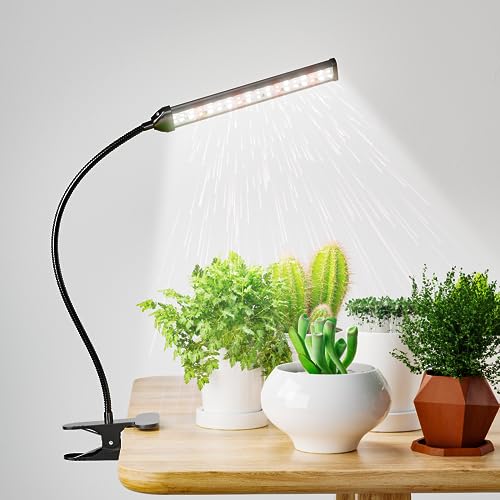
GooingTop Grow Light LED Gooseneck Lamp,6500K 50W Full Spectrum 72 LED Plant Lamp Clip-on Desk for Indoor Plants Growing,Lighting Brightness Changeable,Timer 4 8 12 18Hrs
- 6500K Full Spectrum White Light - equipped with 12 Red + 60 White LEDs, this growing Lamp is similar to the full-spectrum sunlight at noon,that is professionally designed for indoor garden plants.Moreover, its color rendering index is as high as 90, the light is soft and flicker-free,perfect for indoor plants growing
- High Efficiency LED Lamp - as for LED power draw this clamp grow lamp only consume about 6 watts but is equivalent to a 50W Halogen Bulb. Monthly cost roughly $1 in electricity (18 hours a day). It is a great gift if you growing some potted plants.
- Upgraded Timer 4/8/12/18Hrs - this growing lamp offer the timer function with 4 options that is 4H or 8H or 12H or 18Hrs , it is based on a 24 hour cycle from the time you set the timer.For example,when keeping power ON, if you select 18 Hrs,it will turns ON for 18 hours per 24 hours.The other three timer settings are the same.
- Easy to Install - with flexible Goose Neck & strong clamp,it allows you to place the growth light in any direction to provide the best lighting angle for your plants,meet the cover around the plant.
- A Best Gift for Your Cute Plants - the led lamp weight is about 13 ounces, very compact and flexible, it could emit a soft and efficient aperture. And its neck is very stable and supports 360-degree adjustable, which is very flexible and useful, especially for tabletop plants
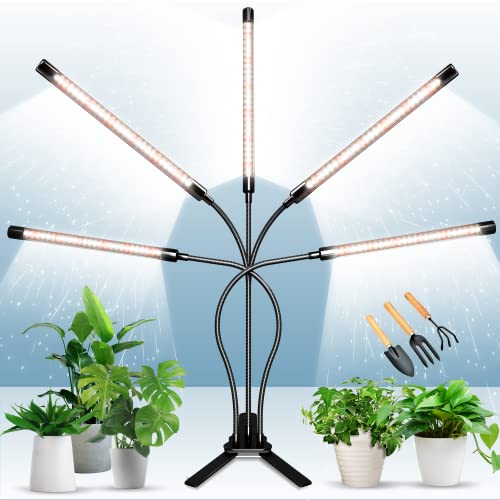
Knente Grow Lights for Indoor Plants, DICCEAO 150W LEDs Grow Light for Seed Starting with Full Spectrum, 3/9/12H Timer, 10 Dimmable Levels, 3 Switch Modes
- 5 Head 150 LEDs Plant Light for Indoor Plants: This plant growing lamp consists of 150 effective growing LEDs, divided into 120 white LEDs and 30 red LEDs. The 5 heads grow light for indoor plants supplies a broader lighting range than the traditional 2, 3, and 4 heads indoor plants lights, and increases the intensity of the light by up to 50%, allowing your plants to receive better and extra light energy.
- 3 Spectrum Modes & 10 Brightness Levels: The full spectrum led grow light has 3 spectrum modes, which are Red, Full, and Mixed Spectrum. It has ten brightness settings, starting from 10% to 100%, that can be switched as per your requirements, so you are able to choose the more proper spectrum and brightness for your plant to grow in the best way. The indoor plant lights make your plants develop a rapid response to grow, five times faster than plants with natural light only.
- Auto Timer Function & On/Off Cycle: Designed with a function for autocycle memory timing, there are different three timer settings for you to choose from, between 3H, 9H, and 12H of lighting time. Following your setting, the plant grow light will switch on/off automatically every day. Even when you are away from home, these grow light lamps will take good care of your plants every day.
- Flexible Gooseneck Neck & Strong Clip: You can place and clamp the 5 head grow light anywhere as it has a strong clip and bracket support for it to be stable. The indoor grow lights have a 360 rotation design that can be independently adjustable, so each can be rotated to any angle to adapt to your requirements, which supplies a wider and more flexible range of light, and different growing directions.
- Designed for Indoor Plants to Growth: These plant lights for indoor growing is perfect for the different sunlight needs of your plants depending on their growing stage, from seeds to every growing phase. The lamps have an excellent performance of fast heat dissipation, which ensures that these lamps provide you with a long-lasting and durable service life of up to 80,000 hours.
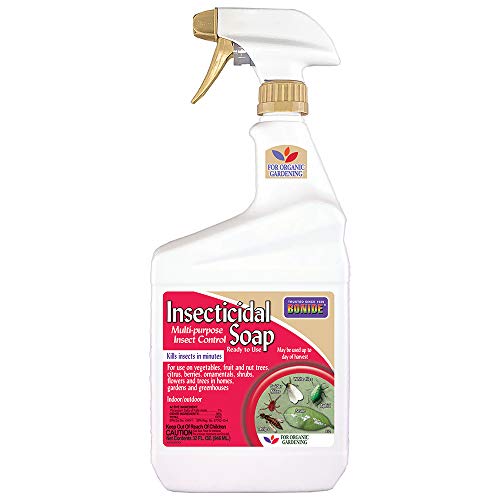
Bonide Insecticidal Soap, 32 oz Ready-to-Use Spray Multi-Purpose Insect Control for Organic Gardening Indoor and Outdoor
- Captain Jack's Insecticidal Super Soap controls species of adelgid, ant, aphid, borer, caterpillar, spider mite, cricket, chinch bug, weevil, fly, thrip, and more
- Designed for outdoor residential use in home gardens, lawns, ornamentals, and greenhouses; use on artichoke, cabbage, onions, berries, basil, lavender, mint, sage, pistachios, almonds, apples, plums, cilantro, lawns, turf and more
- Product kills through direct contact and ingestion; spray insects, such as aphids, directly or allow leaf feeding insects, such as worms and caterpillars, to eat the leaf surface to die
- Approved for organic gardening, Captain Jack's Insecticidal Super Soap is suitable for all of your organic gardening needs
- Product is conveniently ready-to-use when it arrives at your home, the spray nozzle makes this product easy to deploy; for full use instructions, please see product label
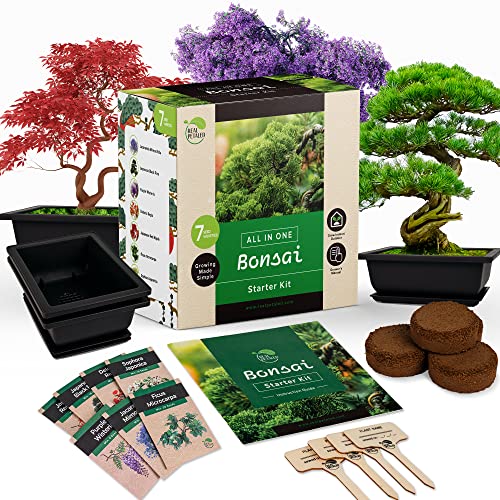
REALPETALED Bonsai Starter Kit – Japanese Bonsai Tree Kit with Bonsai Tools, 7 Bonsai Tree Seeds, Pots – Complete Grow Your Own Bonsai Tree Live Kit – Plant Lover Gifts Home Gifts for Men and Women
- Create a Nurturing Environment: The Realpetaled Bonsai Tree Kit not only provides the opportunity to grow your own bonsai at home but also the chance to nurture and care for something that will fill your own with peace and calm, and stand as a reminder of your patience and love for generations to come!
- Complete Bonsai Starter Kit: This complete bonsai tree starter kit includes everything you need for a rewarding and fun experience, such as 7 x different bonsai tree seeds, 7 x bonsai soil discs, 7 x reusable pots, 7 x plant markers, 3 x bonsai gardening tools, 1 x bonsai scissors, and step-by-step instructions.
- No Experience Required: Our bonsai tree starter kit comes with detailed instructions that are easy to follow and understand, so you can grow a bonsai tree at home, whether you are a beginner, professional or passionate about gardening!
- Beautiful Bonsai Variations: The indoor bonsai tree kit comes with exquisite bonsai tree variations, such as Jacaranda Mimosifolia, Japanese Black Pine, Purple Wisteria, Delonix Regia, Japanese Red Maple, Ficus Microcarpa, and Sophora Japonica.
- Lovely Gift for Plant Lovers: If you are looking for cool gifts for plant lovers, our bonsai starter kit is the way to go! The set makes a nice gardening gift set for men and women on a special occasion, such as a birthday, anniversary, Christmas, holiday, Father’s Day, Mother’s Day and more.

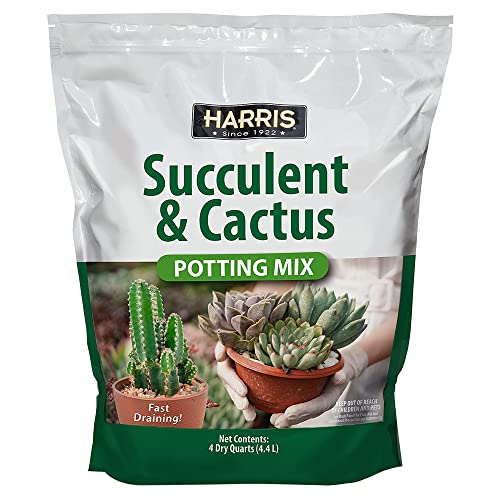
- Balanced Blend - Professional quality mix of forest humus, pumice, compost, perlite, peat moss, fish bone meal and limestone
- Excellent Drainage - Fast draining formula prevents root compaction to keep your succulent and cacti healthy
- Versatile - Use indoors or outdoors on a variety of cacti, succulent and drought tolerant plants such as Burro’s Tail, Echeverias, Houseleek
- See the Difference - Ready to use, pH balanced formula provides the drainage and nutrients cacti and succulents need to flourish
- Easy Zip Bag - Packaged in a 4 quart resealable zip bag for ongoing use
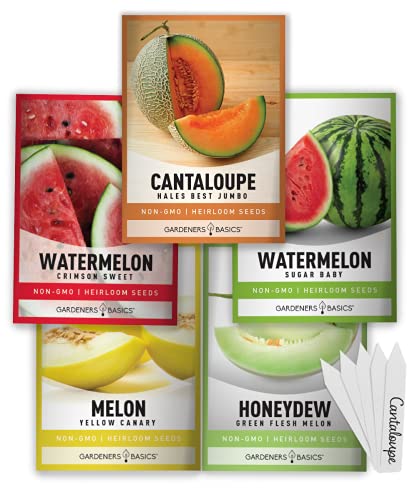
Melon Fruit Seeds For Planting Home Garden 5 Variety Packs - Hales Best Cantaloupe, Crimson Sweet Watermelon, Yellow Canary Melon, Green Flesh Honeydew Melon, Sugar Baby Watermelon by Gardeners Basics
- 5 VARIETY PACK - Hales best cantaloupe, crimson sweet watermelon, yellow canary melon, green flesh honeydew, sugar baby watermelon.
- OUTDOOR GARDEN - Whether growing in a greenhouse or using the melon seeds for planting home garden, these varieties are wonderful!
- TASTY - There's nothing like a fresh, homegrown melons picked straight from the garden.
- EASY TO GROW - Growing melons in the home garden is rewarding and easy to do.
- USA - All of our non-GMO, heirloom melon and watermelon seeds for planting were grown, harvested and packaged in the USA.
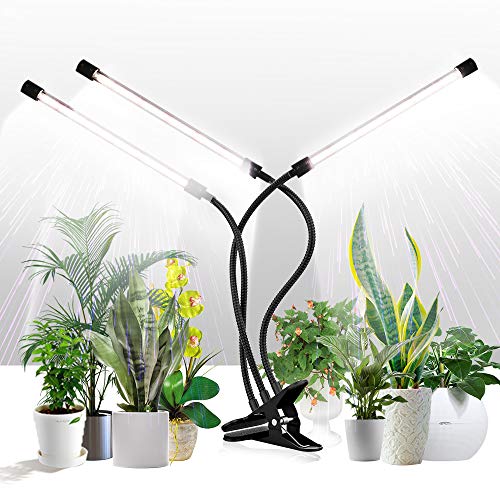
GHodec Grow Light for Indoor Plants,6000K 126LED Clip Plant Lights with Flexible Gooseneck & Timer Setting 4/8/12H,5 Dimmable Levels
- 【Sunlight White + Red LEDs】Eqquiped with 5 Red+37 Sunlight White LEDs in each bar,which is similar to the sunlight at noon,and ideal for all sorts of indoor plants at all growth stages.Also,GHodec 6000K LED lights provides exceptional color-rendering up to 95 ,it is flicker-free and soft light,perfect for you to reading at night.
- 【Timing Function & Versatile Settings】 Indoor plant lights offer 3 timing options-4H/8H/12H lighting time everyday. Auto on/off and no more manually operation everyday.Each LED bar can control its on/off separately. You can press the switch button multiple times -- one light ON, two lights ON, three lights ON,or all are off.You can also adjust the brightness of the led grow lamp according to your plants needs.
- 【Sturdy Gooseneck & Strong Clamp】with anti-slip clamp and 360-degree adjustable gooseneck,it allows you to place the plant light in any direction to provide the best lighting angle for your plants coverage around the plants .
- 【Highly Efficient】- as for LED power draw this clamp light is highly efficient.Estimately monthly cost roughly $2 in electricity (8 hours a day). Not a bad investment if you growing some small plants,like seedlings,succulents,house-plants,etc.
- 【Widely Used】Suitable for balconies,greenhouses,darkroom,office and so on.Widely apply to the culture solution,gardening,potted plants,especially when the plant needs extra light when raining,snowing,dark indoor,etc.

Bonsai Soil by The Bonsai Supply – 2qts. Professional Bonsai Soil Mix | Ready to use| Great for All Bonsai Tree Varieties.
- 🌱【Ready-to-use Pre-mix】: Simplify repotting your Bonsai and other plants with our premium, fast-draining Bonsai potting soil mix. It comes pre-mixed and sifted for your convenience.
- 🌱【Optimal Blend for Perfect Results】: Experience Bonsai bliss! Our specially crafted Bonsai plant mix provides ideal drainage, pH balance, water retention, nutrient uptake, and aeration. Achieve the perfect balance of air and moisture while nourishing your plants with essential nutrients.
- 🌱【Versatile for All Plants】: Enjoy a harmonious blend of nature that caters to all Bonsai and container-grown plants. From herbs and cacti to succulents and more, our mix suits any potted plant. Plus, all aggregates are sourced locally in the USA.
- 💚【Eco-friendly Sealed Packaging】: Our commitment to the environment shows with our durable, resealable Ziplock Standup Pouch made from recycled materials. Together, we contribute to a greener world ♻️.
- ✅【Guaranteed Satisfaction】: At The Bonsai Supply, we're passionate about delivering top-quality plant soil mixes. Trusted by our nursery and loved by customers, this soil mixture is our number one seller. In the unlikely event that you don't absolutely adore this Bonsai soil mix, rest easy knowing you're backed by our 100% Money-Back Satisfaction Guarantee. Your happiness is our priority.
Last update on 2022-01-29. Price and availability of products may change.