The red maple also known as swamp or water is one of the most widespread and widely distributed deciduous trees in eastern and central North America. It is the most common native tree in eastern North America, according to the U.S. Forest Service. It can be found from southeastern Manitoba to the Lake of the Woods, at the border of Ontario and Minnesota, east and south to Florida and southwest to East Texas. Its leaves are a great example of this. It can reach a height of 30 m (100 feet) at maturity. Its flowers, petioles, twigs and seeds are all red to varying degrees. It is most well-known for its autumn deep scarlet leaves.
Red maple can be grown in most areas of the range. It is more adaptable than any other tree in eastern North America. It can be found growing in swamps, on poor dry soils, and almost anywhere in between. It grows well from sea level to about 900 m (3,000 ft). It is commonly used in landscapes as a shade tree due to its beautiful fall foliage and attractive form. It is used commercially on a small scale for maple syrup production as well as for its medium to high quality lumber. It is also the state tree of Rhode Island. The red maple can be considered weedy or even invasive in young, highly disturbed forests, especially frequently logged forests. In a mature or old growth northern hardwood forest, red maple only has a sparse presence, while shade tolerant trees such as sugar maples, beeches, and hemlocks thrive. By removing red maple from a young forest recovering from disturbance, the natural cycle of forest regeneration is altered, changing the diversity of the forest for centuries to come.

Contents
- 1 Description
- 2 Cultivation
- 3 Ecology
- 4 Products
- 4.1 Bonsai Soil by The Bonsai Supply – 2qts. Professional Bonsai Soil Mix | Ready to use| Great for All Bonsai Tree Varieties.
- 4.2 Bonsai Soil Premium All Purpose Blend | Pre-Mixed Ready to Use for Fast Drainage | Large 2.2 Quarts | Lava, Limestone Pearock, Calcined Clay and Pinebark | Made in USA
- 4.3 300+ Bonsai Tree Seeds – 10 Popular Varieties of Non GMO Heirloom Bonsai Seeds Red Maple, elm Tree, Blue Spruce, Black Spruce, Black Pine, Wisteria, Sakura, Flame Tree, Bauhinia, Dawn Redwood
- 4.4 50+ Red Maple Seeds for Planting Outdoors - Heirloom Maple Tree Seeds (Acer rubrum)
- 4.5 Brussel's Bonsai Live Trident Maple Outdoor Bonsai Tree 5 Years Old 8"-12" Tall with Decorative Container, Medium
- 4.6 Plant Theatre Bonsai Tree Kit - Indoor Plant Growing Kit w/ 3 Mini Bonsai Seed Packs, 6 Pots, 6 Peat Discs and 6 Propagator Bags - Gardening Gifts for Men, Women and Room Decor - Crafts for Adults
- 4.7 Bonsai Tree Dragon Willow - Thick Trunk Bonsai Cutting - Fast Growing Indoor/Outdoor Bonsai Tree - Ships Bare Root - Old Mature Look Fast
- 4.8 Brussel's Bonsai Live Chinese Elm Bonsai Tree, Outdoor - Medium, 7 Years Old, 8 to 10 inches Tall - Includes Ceramic Bonsai Pot and Humidity Tray
- 4.9 Red Maple | Medium Tree Seedling | The Jonsteen Company
- 4.10 Red Maple Seeds for Planting Outdoors - Heirloom Maple Tree Seeds (Acer rubrum) - (500 Seeds)
Description
Though A. rubrum is sometimes easy to identify, it is highly changeable in morphological characteristics. It is a medium to large sized tree, reaching heights of 27 to 38 metres (90 to 120 ft) and exceptionally over 41 metres (135 feet) in the southern Appalachians where conditions favor its growth. The leaves are usually
9 to 11 centimetres (3+1/2 to 4+1/4 in) long on a full-grown tree. The average trunk diameter is 46-88 cm (18-35 in). However, depending on the growing conditions, trees grown in open areas can reach 153 centimetres (60in) in length. On trees that are forest-grown, the trunk will not be affected by branches up to a certain distance. Trees grown open can reach a diameter of up to 153 cm (60 in). Individuals grown in the open tend to be shorter and thicker with a more round crown. Trees on poorer sites often become malformed and scraggly. The crown is usually irregularly shaped with ascending whip-like curves. The bark is a pale grey and smooth when the individual is young. As the tree grows the bark becomes darker and cracks into slightly raised long plates. The largest known living red maple is located near Armada, Michigan, at a height of 38.1 m (125 ft) and a bole circumference, at breast height, of 4.95 m (16 ft 3 in).
It is easiest to identify the red maple from its relatives by its leaves. As with all North American maple trees, they are deciduous and arranged oppositely on the twig. They are typically 5-10 cm (2-4 in) long and wide with 3-5 palmate lobes with a serrated margin. Although the sinuses are usually narrow, there can be considerable variation in the leaves. The three closest to the base are the largest lobes, while the others are smaller when there are five. In contrast, the leaves of the related silver maple, A. saccharinum, are much more deeply lobed, more sharply toothed and characteristically have 5 lobes. The upper side of A. rubrum’s leaf is light green and the underside is whitish and can be either glaucous or hairy. The stalks of the leaf are typically reddish and can reach 10 cm (4 inches) in length. The leaves can turn a characteristic brilliant red in autumn, but can also become yellow or orange on some individuals. Soil acidity can influence the color of the foliage and trees with female flowers are more likely to produce orange coloration while male trees produce red. The fall colors of red maple are most spectacular in the northern part of its range where climates are cooler.
The twigs from the red maple are reddish-colored and slightly shiny, with small lenticels. Dwarf shoots are present on many branches. The buds are typically blunt, greenish-reddish in color and have many loose scales. The lateral buds are slightly stalked, and in addition there may be collateral buds present as well. Because of their reddish-tinted and large size, the buds are easily visible from afar. The twig’s leaf scars are V-shaped with three bundle scars.
They are usually unisexual with the male and female flowers appearing separately in sessile clusters. However, they can sometimes be bisexual. They appear in late winter to early spring, from December to May depending on elevation and latitude, usually before the leaves. The tree itself is considered polygamodioecious, meaning some individuals are male, some female, and some monoecious. Under the proper conditions, the tree can sometimes switch from male to female, male to hermaphroditic, and hermaphroditic to female. The red maple will begin blooming when it is about 8 years old, but it significantly varies between tree to tree: some trees may begin flowering when they are 4 years old. These flowers have 5 small petals and a 5-lobed, 5-lobed calyx. They are usually found at the twig ends. Stamininate flowers are sessile. The pistillate flowers are borne on pedicels that grow out while the flowers are blooming, so that eventually the flowers are in a hanging cluster with stems 1 to 5 cm (1/2 to 2 in) long. The petals are lineal to oblong in shape and are pubescent. The pistillate flowers have one pistil formed from two fused carpels with a glabrous superior ovary and two long styles that protrude beyond the perianth. Staminates flowers have between 4 to 12 stamens.
The fruit is a samara 15 to 25 millimeters (5/8 to 1 in) long that grows in pairs with somewhat divergent wings at an angle of 50 to 60 degrees. They are borne on long slender stems and are variable in color from light brown to reddish. They ripen from April through early June, before even the leaf development is altogether complete. After they reach maturity, the seeds are dispersed for a 1 to 2 week period from April through July.
Cultivation
Red maple’s rapid growth, ease of transplanting, attractive form, and value for wildlife (in the eastern US) has made it one of the most extensively planted trees. It is one of the most commonly introduced trees in the Pacific Northwest. Its vigorous habit, attractive early red flowers and flaming red leaves make it a popular choice for cultivation. It was first introduced to the United Kingdom in 1656, and soon thereafter it was put into cultivation. It is often found in parks and yards.
When there is enough space for the root system, red maple is an excellent choice for urban plantings. Forming an association with Arbuscular Mycorrhizal Fungi can help A. rubrum grow along city streets. Although it is more resistant to pollution and road salt than sugar maples the tree’s autumn foliage is less vibrant in such environments. It can become invasive, and is not recommended for planting near paving. It attracts squirrels, who eat its buds in the early spring, although squirrels prefer the larger buds of the silver maple.
Red maples are vibrant and colorful and make great bonsai.
Cultivars
Numerous cultivars have been selected, often for intensity of fall color, with ‘October Glory’ and ‘Red Sunset’ among the most popular. Toward its southern limit, ‘Fireburst’, ‘Florida Flame’, and ‘Gulf Ember’ are preferred. There are many cultivars that can be grown in abundance. Below is a partial list of cultivars:
Ecology
Red maple’s maximum lifespan is 150 years, but most live less than 100 years. The tree’s thin bark can be easily damaged by animals, ice, storms, and flying debris from lawnmowers. This allows fungi to enter the tree and cause heart disease. Its ability to thrive in a large number of habitats is largely due to its ability to produce roots to suit its site from a young age. In wet locations, red maple seedlings produce short taproots with long, well-developed lateral roots; while on dry sites, they develop long taproots with significantly shorter laterals. However, the roots form in the top 25 cm (9.8 inches) of the ground. Woody roots can reach 25 m (82 feet) in mature trees. One study showed that flooding did not cause leaf damage after 60 days. At the same time, they are tolerant of drought due to their ability to stop growing under dry conditions by then producing a second growth flush when conditions later improve, even if growth has stopped for 2 weeks.
Acer rubrum flowers in spring. There is a crop of seeds produced each year, with a bumper crop occurring often every other year. A single tree with a diameter of between 5 and 20 cm (2.0 and 7.9 inches) can produce between 12,000 to 91,000 seeds per season. A tree measuring 30 cm (0.98 ft in diameter) was found to yield nearly one million seeds. Red maple produces one of the smallest seeds of any of the maples. Fertilization has also been shown to significantly increase the seed yield for up to two years after application.
The seeds are epigeal and tend to germinate in early summer soon after they are released, assuming a small amount of light, moisture, and sufficient temperatures are present. If the seeds are densely shaded, then germination commonly does not occur until the next spring. Most seedlings do not survive in closed forest canopy situations. Under dense canopy, however, seedlings as young as one to four years old are quite common. They eventually die if there is no light, but they can be used as a reservoir and wait to fill any gaps in the canopy.
Trees that grow in Zone 9 or 10 areas such as Florida, will die from cold damage if they are moved up north to Canada, Maine and Vermont. This is even if the northern trees were planted with northern maples. Because of their large range, the trees are genetically able to adapt to the climate.
Red maple can increase its numbers dramatically when associated trees are cut, diseased, or burned. One study found that 6 years after clearcutting a 3.4 hectares (8.4 acres) Oak-Hickory forest containing no red maples, the plot contained more than 2,200 red maple seedlings per hectare (900 per acre) taller than 1.4 m (4.6 ft). The black cherry ( Prunus Serotina), one of its partners, contains benzoic acid which has been proven to be an allelopathic inhibitor for red maple growth. Stem elongation is a first-ever start in red maple. One study found that stem elongation took one-half the time it took to complete. After that, growth slowed down and was completed 90% in just 54 days. In good light and moisture conditions, the seedlings can grow 30 cm (0.98 ft) in their first year and up to 60 cm (2.0 ft) each year for the next few years, making it a fast grower.
The red maple is used as a food source by several forms of wildlife. The current season’s red maple growth is a key source of winter food for white-tailed deer and elk. Several Lepidoptera (butterflies and moths) utilize the leaves as food, including larvae of the rosy maple moth (Dryocampa rubicunda); see List of Lepidoptera that feed on maples.
Due to A. rubrum’s very wide range, there is significant variation in hardiness, size, form, time of flushing, onset of dormancy, and other traits. The north has the best flushing, the reddest fall color, the earliest set of buds, and the least winter injury. Seedlings are tallest in the north-central and east-central part of the range. It is restricted to swamplands in Florida, which is at the extreme southern end of the red maple range. They also have different geographical distributions. Northern individuals are more likely to produce fruits that are smaller and heavier than those in the south. As a result of such variation, there is much genetic potential for breeding programs with a goal of producing red maples for cultivation. This is especially useful for making urban cultivars that require resistance from verticillium wilt, air pollution, and drought.
Red maple often hybridizes with silver maple. The hybrid is Acerx freemanii and is considered intermediate between the parents.
Allergenic potential
The allergenic potential of red maples varies widely based on the cultivar.
These cultivars are entirely male and highly allergenic. They have an OPALS allergy score of 8 or higher.
These cultivars have an OPALS allergen scale rating of 3 or less; they are entirely female trees and have low potential to cause allergies.
Toxicity
The leaves of red maple, especially when dead or wilted, are extremely toxic to horses. The toxin is unknown, but believed to be an oxidant because it damages red blood cells, causing acute oxidative hemolysis that inhibits the transport of oxygen. This reduces oxygen delivery to all tissues and can also cause methemoglobin production, which can further damage your kidneys. The ingestion of 700 grams (1.5 pounds) of leaves is considered toxic and 1.4 kilograms (3 pounds) is lethal. Symptoms occur within one or two days after ingestion and can include depression, lethargy, increased rate and depth of breathing, increased heart rate, jaundice, dark brown urine, colic, laminitis, coma, and death. The treatment options are limited. They include blood transfusions, fluid support and anti-oxidants like Vitamin C.
Products

Bonsai Soil by The Bonsai Supply – 2qts. Professional Bonsai Soil Mix | Ready to use| Great for All Bonsai Tree Varieties.
- 🌱【Ready-to-use Pre-mix】: Simplify repotting your Bonsai and other plants with our premium, fast-draining Bonsai potting soil mix. It comes pre-mixed and sifted for your convenience.
- 🌱【Optimal Blend for Perfect Results】: Experience Bonsai bliss! Our specially crafted Bonsai plant mix provides ideal drainage, pH balance, water retention, nutrient uptake, and aeration. Achieve the perfect balance of air and moisture while nourishing your plants with essential nutrients.
- 🌱【Versatile for All Plants】: Enjoy a harmonious blend of nature that caters to all Bonsai and container-grown plants. From herbs and cacti to succulents and more, our mix suits any potted plant. Plus, all aggregates are sourced locally in the USA.
- 💚【Eco-friendly Sealed Packaging】: Our commitment to the environment shows with our durable, resealable Ziplock Standup Pouch made from recycled materials. Together, we contribute to a greener world ♻️.
- ✅【Guaranteed Satisfaction】: At The Bonsai Supply, we're passionate about delivering top-quality plant soil mixes. Trusted by our nursery and loved by customers, this soil mixture is our number one seller. In the unlikely event that you don't absolutely adore this Bonsai soil mix, rest easy knowing you're backed by our 100% Money-Back Satisfaction Guarantee. Your happiness is our priority.
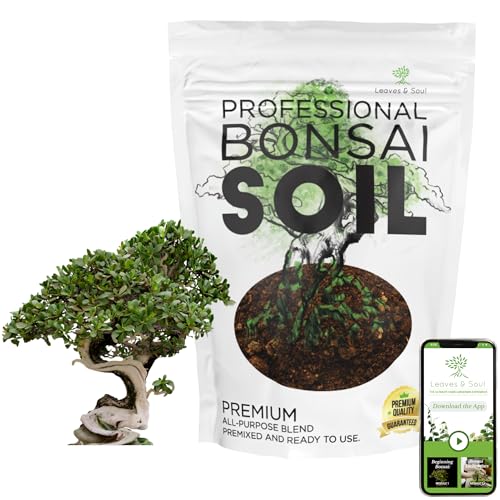
- 🌳 SUPPORT YOUR BONSAI'S GROWTH - Give your tree the nourishing environment it needs to thrive! This premixed, ready to use bonsai soil blend is made up of premium non-organic all-purpose soil.
- 🌳 FIT FOR ALL BONSAI VARIETIES - Whether you're growing an Azalea or a Bald Cypress, our bonsai soil won't disappoint. It maximizes fertilizer absorption and provides excellent aeration to the roots.
- 🌳 PROMOTES OPTIMUM DRAINAGE - Our bonsai soil mix holds an adequate amount of moisture to meet the plant's needs, yet still allows the water to drain well. This helps prevent over-watering.
- 🌳 GET MORE FOR YOUR MONEY - With 2.2 quarts in every bag, our bonsai soil offers you great value compared to many other options on the market. It also comes in a sturdy, resealable bag.
- 🌳 BUY WITH CONFIDENCE - Our bonsai soil blend is MADE IN THE USA. If you are not satisfied with what you receive, let us know and we'll arrange a refund or replacement immediately.

300+ Bonsai Tree Seeds – 10 Popular Varieties of Non GMO Heirloom Bonsai Seeds Red Maple, elm Tree, Blue Spruce, Black Spruce, Black Pine, Wisteria, Sakura, Flame Tree, Bauhinia, Dawn Redwood
- Red Maple (Acer rubrum). elm Tree,American Elm, or Ulmus americana(Ulmus). Blue Spruce (Picea pungens). Black Spruce (Picea mariana). Black Pine (Pinus nigra). Wisteria (Wisteria). Sakura(Prunus subg. Cerasus sp.). Flame Tree (Brachychiton acerifolius) is also known as Illawarra Flame Tree. Bauhinia (Bauhinia) Dawn Redwood (Metasequoia Glyptostroboides)

50+ Red Maple Seeds for Planting Outdoors - Heirloom Maple Tree Seeds (Acer rubrum)
- STUNNING RED LEAF: Red maple are a sight to see. Red leaves are beautiful and an iconic sign of the change of the seasons. 50+ Seeds
- EASY TO GROW: Planting instructions and a video link are included. Cold stratification is benefical to optimal germination.
- CZ GRAIN GUARANTEE: Buy with confidence from CZ Grain. You get authentic Japanese Maple Tree seeds. Satisfaction Guaranteed.
- GROWING TIPS: All Natural Soil Like CZ Grain Soil, or Fox Farms Ocean Forest Soil is very good soil!
- GROW OR GIFT: Great gift for any bonsai or plant lover, can be grown outoors. Bonsai is very theraputic. Christmas or birthday present.

Brussel's Bonsai Live Trident Maple Outdoor Bonsai Tree 5 Years Old 8"-12" Tall with Decorative Container, Medium
- CONTENTS: Bonsai, Decorative Container (Assorted Colors & Styles), Soil, Care Instructions.
- SPECIES: Trident Maples are highly desired for bonsai due to their small, three-lobed leaved, thick gnarly roots that are perfect for the dramatic root over rock technique and a readily thickening trunk that boasts an attractive orange brown peeling appearance. It is a deciduous tree, shedding it's leaves in the Fall. Leaves should return in Spring.
- AGE/SIZE/CARE: Your 5 year old bonsai will arrive between 8" to 12" tall in an 8" container and will perform best outdoors (see detailed care instructions in images)
- USES: Ideal Mother’s Day gift, office & cubicle décor or a centerpiece for any kitchen table, desktop, window plant or outdoor décor.
- WARRANTY: Your bonsai tree has been grown in a state-of-the-art greenhouse under precisely controlled conditions to achieve optimum health. If for any reason you are not completely satisfied with your tree or with our service, please notify us within 30 days of receipt. We will correct the situation to your satisfaction.
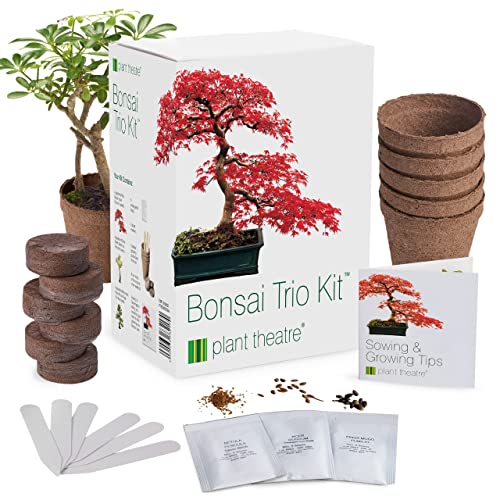
Plant Theatre Bonsai Tree Kit - Indoor Plant Growing Kit w/ 3 Mini Bonsai Seed Packs, 6 Pots, 6 Peat Discs and 6 Propagator Bags - Gardening Gifts for Men, Women and Room Decor - Crafts for Adults
- UNIQUE VARIETIES - Add something unique to your home decor with 3 different bonsai varieties – Silver Birch (Bethula Pendula), Red Maple (Acer Rubrum), and Mountain Pine (Pinus Mugo Pumilio).
- ALL SUPPLIES INCLUDED - The perfect plant gifts have arrived. This kit includes 6 pots, 6 peat discs, 6 markers, seeds, propagator bags, and a guide to get your bonsai kit up and running.
- PEACEFUL PLANTING - Find your zen by growing, trimming, and caring for your own bonsai for years to come. One of the most peaceful hobbies for women, men, or anyone with a green thumb.
- INTERMEDIATE LEVEL - Ready to take your gardening up a notch? These bonsai seed sets are the perfect gifts for gardeners who are a little familiar with the basics of botany, but even beginners can follow along!
- SENSATIONAL STOCKING STUFFERS - Looking for Christmas gifts, unique gifts for women and men, or just some basic plant lover gifts for the groovy grower in your life? Grab our kit this season!

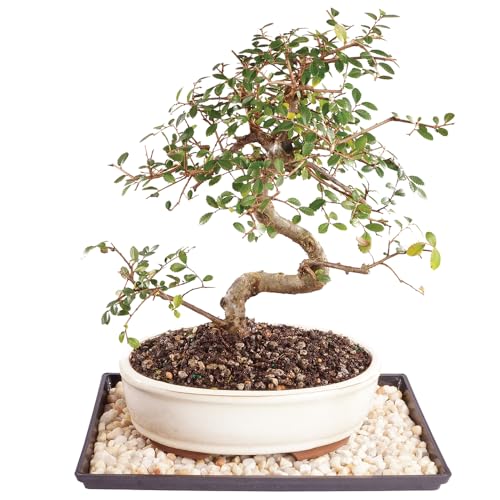
Brussel's Bonsai Live Chinese Elm Bonsai Tree, Outdoor - Medium, 7 Years Old, 8 to 10 inches Tall - Includes Ceramic Bonsai Pot and Humidity Tray
- CONTENTS: Bonsai, Decorative Container (Assorted Colors & Styles), Humidity Tray, Deco Rocks, Soil, Care Instructions.
- SPECIES: The Chinese Elm has beautiful, distinctive dark gray to reddish brown bark that turns fissure and corky when mature. It has a lovely branching shape with delicate, oval shaped toothed leaves that showcase a fresh green color and a delightfully tiny leaf.
- AGE/SIZE/CARE: Your medium 9 year old bonsai will arrive at 10" to 14" tall in a 8" container and will perform best outdoors (see detailed care instructions in images)
- USES: Ideal Mother’s Day gift, office & cubicle décor or a centerpiece for any kitchen table, desktop, window plant or outdoor décor.
- WARRANTY: Your bonsai tree has been grown in a state-of-the-art greenhouse under precisely controlled conditions to achieve optimum health. If for any reason you are not completely satisfied with your tree or with our service, please notify us within 30 days of receipt. We will correct the situation to your satisfaction.
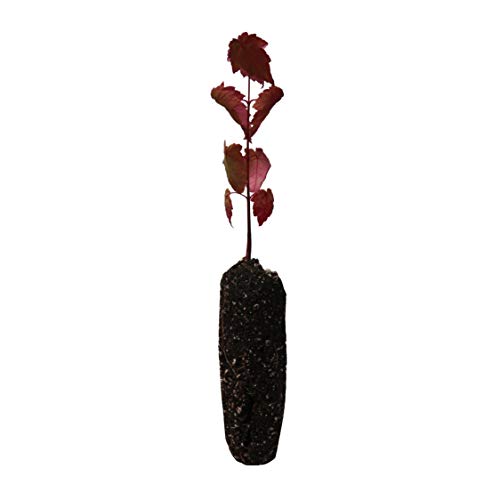
Red Maple | Medium Tree Seedling | The Jonsteen Company
- A beautiful, seasonally-entertaining tree!
- 100% guaranteed: If your seedling perishes, we are happy to provide a replacement small-sized seedling for just the cost of shipping/handling
- Seed-grown on California's Redwood Coast
- Transplanting and care instructions included
- Trees can provide a natural barrier against high winds, temperatures, noise pollution and soil erosion, all while benefiting local air quality, wildlife and property values — a Jonsteen seedling will only grow in value and beauty!
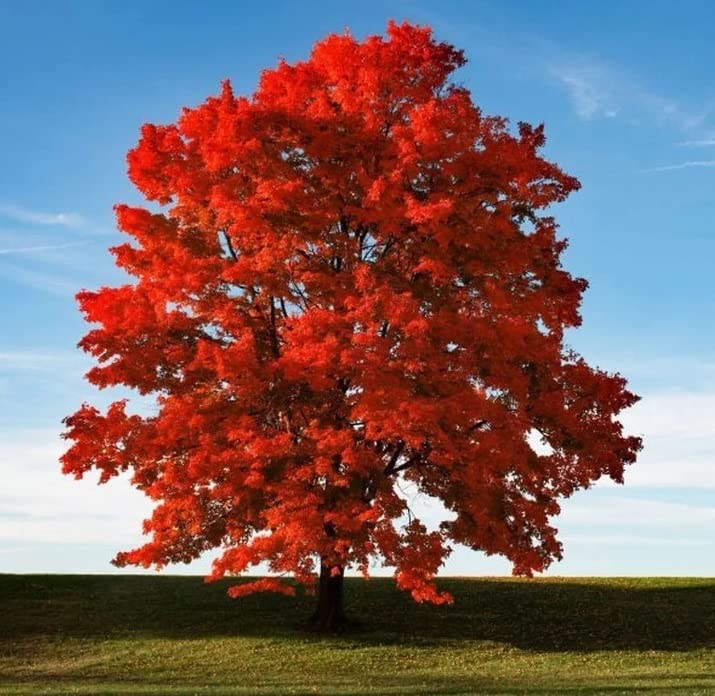
Red Maple Seeds for Planting Outdoors - Heirloom Maple Tree Seeds (Acer rubrum) - (500 Seeds)
- STUNNING RED LEAF: Red maple are a sight to see. Red leaves are beautiful and an iconic sign of the change of the seasons. 50+ Seeds
- EASY TO GROW: Planting instructions and a video link are included. Cold stratification is benefical to optimal germination.
- CZ GRAIN GUARANTEE: Buy with confidence from CZ Grain. You get authentic Japanese Maple Tree seeds. Satisfaction Guaranteed.
- GROWING TIPS: All Natural Soil Like CZ Grain Soil, or Fox Farms Ocean Forest Soil is very good soil!
- GROW OR GIFT: Great gift for any bonsai or plant lover, can be grown outoors. Bonsai is very theraputic.Christmas or birthday present.
Last update on 2022-01-29. Price and availability of products may change.